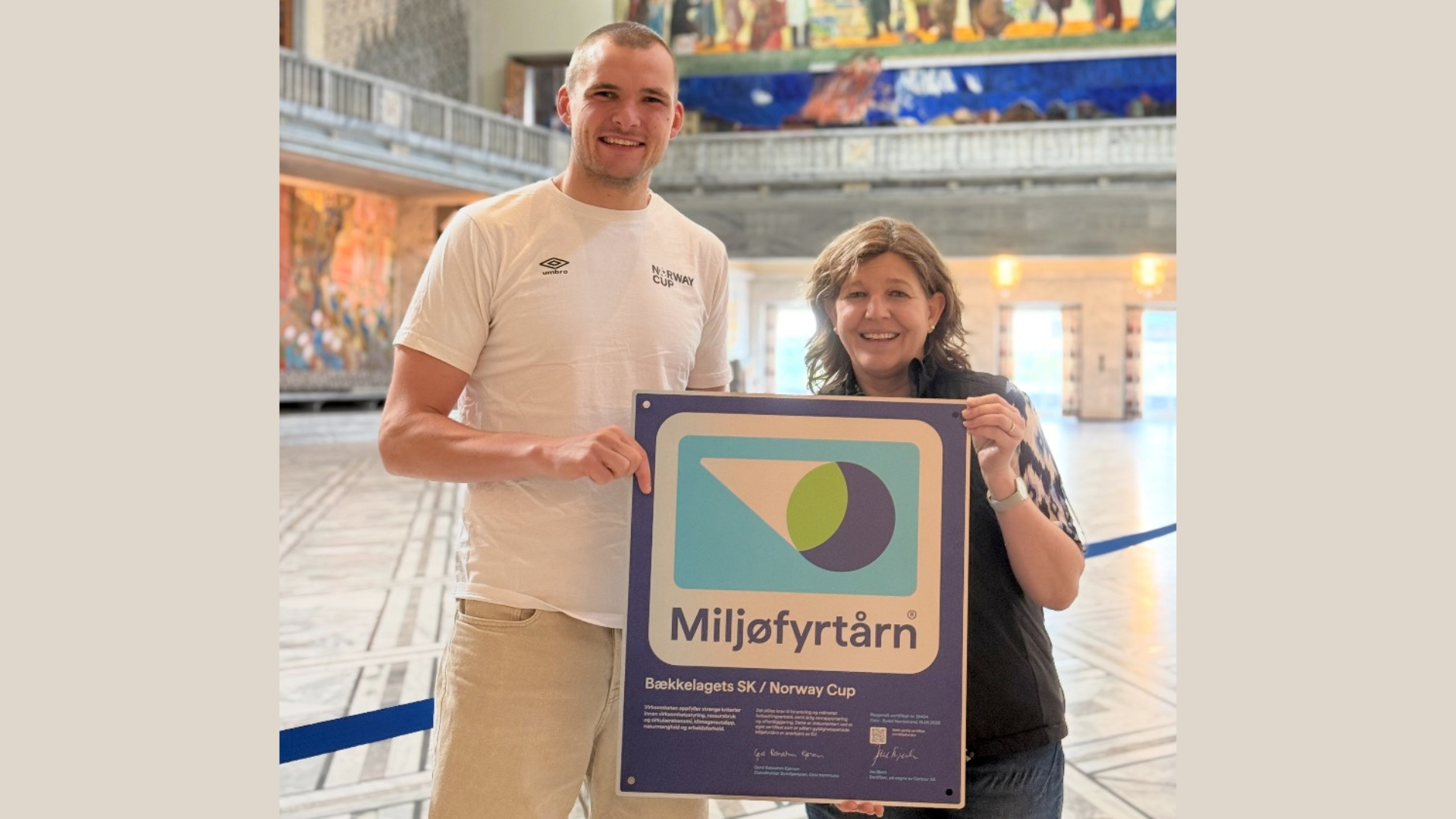
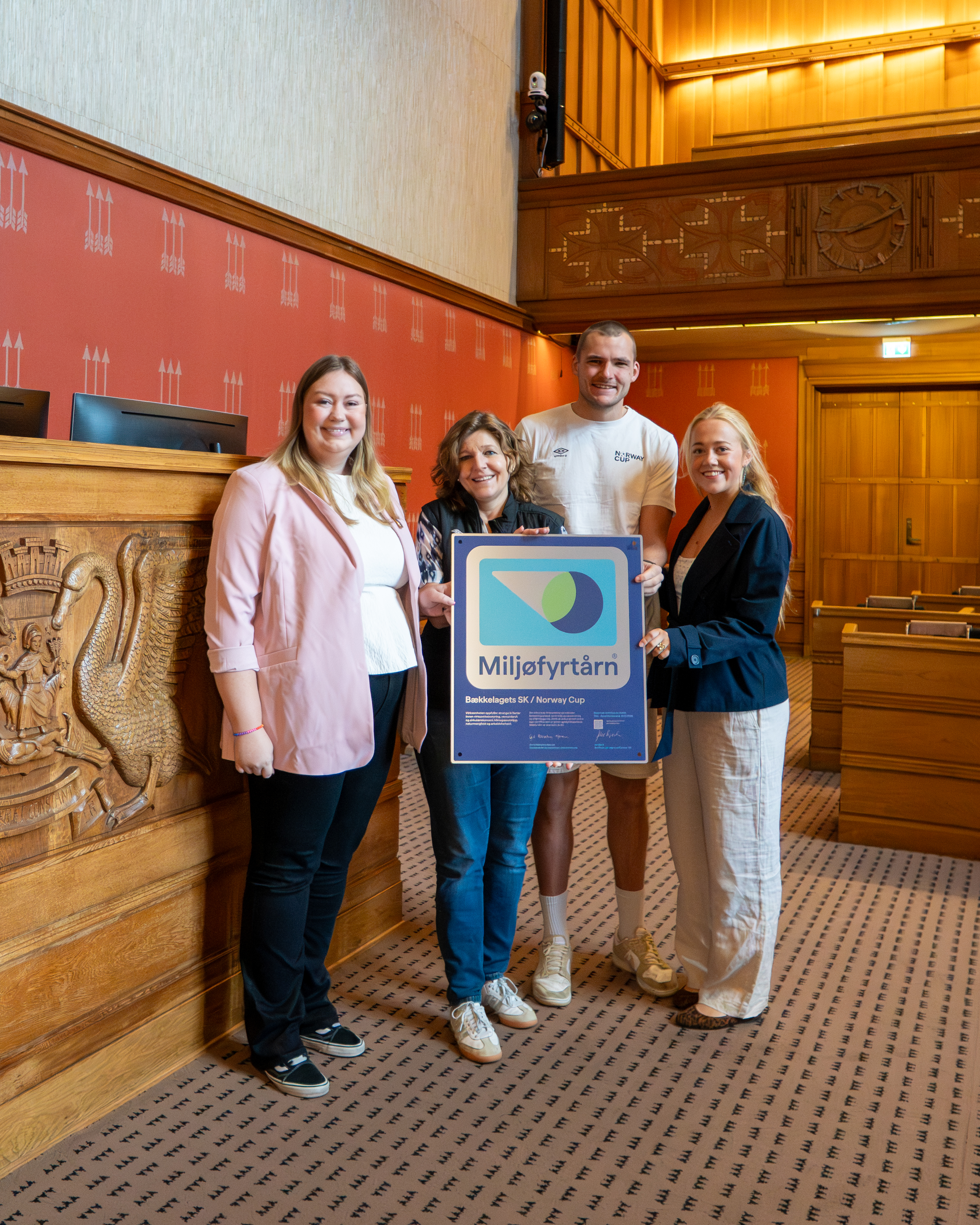
Norway Cup aims to contribute to a more sustainable and inclusive society. Therefore, we take responsibility for our impact. An important step in this work has been taken by certifying the tournament with Miljøfyrtårn.
Having achieved the Environmental Lighthouse certification means that we have established a system and structure for environmental management. This will help us move in the right direction and contribute to our development in several areas. The certification means that Norway Cup must meet specific requirements within (check the MFT pages):
- Working environment
- Waste and reuse
- Energy
- Purchasing and transportation
In the coming years, we will report figures for our activities resulting in an overall climate account, with results and statistics. This will give us a good overview of progress and areas for improvement, which will also be made available to the public.
Norway Cup's sustainability strategy sets the direction for our work in the years to come. The strategy states in general that:
Bækkelagets SK's vision is to create the region's best activity offer for as many people as possible – throughout life. Our activity and operations shall be based on our values – enthusiasm, unity and quality. The club has about 2500 members divided between the sports of skiing, football, orienteering, floorball, handball and athletics. In BSK there shall be an offer for everyone, regardless of background, gender, age, ethnicity, orientation or economy.
Every summer, Bækkelagets SK organizes the world's largest football tournament for children and youth, Norway Cup.
The tournament involves many people and is an important arena for both sportsmanship, inclusion and friendship. Approximately 2,000 volunteers from BSK work as volunteers at the Norway Cup every year. Being Miljøfyrtårn – certified is as much about facilitating a good working environment as it is about reducing the impacts on the climate and environment. Volunteer work at the Norway Cup should be enjoyable, inclusive, safe and developing. In short, all volunteers should want to come back next year.
At the same time, we will continuously work to reduce any negative impacts on the climate and the environment around us. Environmental considerations will be prioritized in all aspects of the business. Calculations made in 2025 show that the major emission areas at Norway Cup come from the categories of food and beverage, transport and accommodation. There is room for improvement here, and we are continuously working to look at alternative and greener solutions.
We look forward to continuing our sustainability work and welcome suggestions and input for improvements. Please contact Frithjof Hübert, Head of Sustainability and Society, at frithjof@bsknc.no